The first thing to understand about Essaouira's weather is that it has very little in common with the Morocco most people picture. No dry 45°C summer days, no suffocating nights, no genuinely cold winters either. The town sits on an exposed Atlantic coast facing due west. The ocean keeps it air-conditioned all year, and the wind — whether you love it or fight it — shows up every summer afternoon to remind you it's the one running things.
So Essaouira has a microclimate that doesn't exist anywhere else in Morocco. Twenty degrees in July while Marrakech is hitting forty. Fifteen in January when the Atlas mountains are under snow. Seasons exist here, but they're compressed. Choosing when to come is really about choosing what you want to do with your days.

Essaouira weather in one word
Mild. That's the word. Always. Mild means it's rarely hot, rarely cold, and you'll basically never need air conditioning. The annual average sits around 17–18°C. The gap between summer and winter is one of the smallest in Morocco.
Concretely: July averages around 22°C during the day on the coast. January around 16°C. Most of the rain falls between November and February, but it's modest — around 300 mm a year, against 700 in Tangier. Skies are often clear, even in winter, and the humidity stays manageable thanks to the constant breeze.
Which means there isn't really a bad time to come. But it's rarely the same trip depending on the season.
The wind — not a detail, the headline
The trade wind, the famous Atlantic alizé, defines Essaouira's weather for ten months out of twelve. It comes from the northeast, it picks up in the afternoon, it dies down at night. You hear it in the harbour flags before you feel it on your skin.
The rough numbers, without sugar-coating:
- June to September: wind almost every day, 25 to 45 km/h by mid-afternoon, sometimes more in July and August. Watersports people love it. Swimmers learn to get up early.
- October to March: wind more intermittent. Calm days are real. When it blows, it can blow hard, but rarely for three days in a row.
- April, May: shoulder. Often calm mornings, moderate afternoons. The most comfortable combination of the year.
The wind is not a nasty surprise once you know it's coming. It cools the air, it chases the mosquitoes, it sends kites flying. What it doesn't do well: let you keep a book open on a café table, or sit motionless on a beach towel at 4 pm in mid-July (the sand arrives sideways). The trick is to shape your days around it. Beach in the morning, indoor break at lunch, town in the late afternoon when it starts to soften.
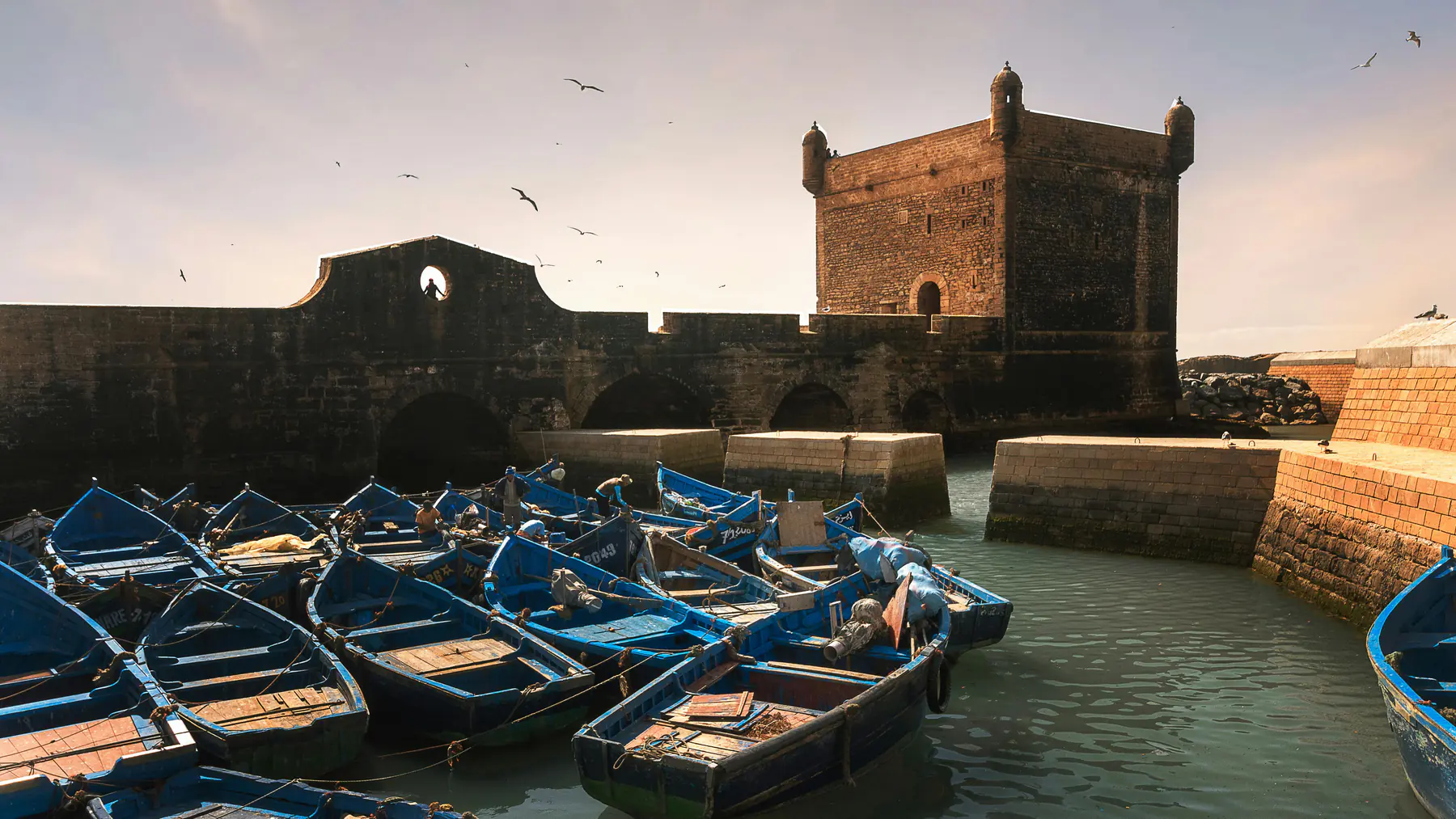
Season by season: what actually changes
April, May, early June — the golden window
If you had to pick a period without knowing anyone here, this is it. Temperatures land in the perfect zone (18–24°C in the afternoon), the wind stays civil, the countryside around the town is in bloom, the argan trees are in leaf. The medina is lively but not saturated. Restaurants still have time to talk to you. This is the season when people show up by accident and end up staying two weeks.
Late June brings the Gnaoua and World Music Festival, four days around the solstice. The town shifts gear during the festival — crowds everywhere, music in every square, no last-minute beds available. It's intense, and gorgeous if you like music. If you want quiet, aim for the week before or the week after.
July, August — the European and Moroccan summer
High season. The central beach is busy in the morning, café terraces overflow, rentals double in price compared to May. The town is lively, international, joyful. It's also when the wind is most insistent — 30 to 45 km/h almost every afternoon, sometimes more.
What it's good for: swimming early (water stays cool, 18–20°C; the Atlantic here is never warm), kitesurfing and windsurfing in the afternoon, mild evenings in town. What it's less good for: if you came to bake on a towel all day, choose Agadir, not Essaouira. The wind decides.
September, October — the actual best time for many
September is probably the favourite month for regulars. School holidays are over, temperatures stay around 24–26°C, the water hits its peak (20–21°C), and the wind starts to settle by the end of the month. October stretches that calm with a particular kind of light — golden, low-angled, making the town photogenic at any hour. It's our season.
November to February — the gentle winter
The quietest months. Temperatures between 10°C at night and 18°C during the day. Rain happens but doesn't stay. Light is often spectacular between two showers. This is the season for writing retreats, work trips, groups taking over a whole villa for a week. Evenings call for a sweater, sometimes a fireplace. The forest villa has one (and the wood is included), and this is probably its best month.
Honestly, winter is also when the light is most beautiful. The low sun stretches across white and blue walls. Shadows draw out the alleys. The medina, empty of tourists, feels entirely yours. If you're after a contemplative trip, this is it, in January.
March — the in-between month
A hinge. Sometimes glorious, sometimes capricious. The last week of March clearly belongs to spring. This is when local hosts reopen what was shut for winter, when the vegetation comes back, when the port finds its rhythm again.
What to do in which season
Rather than picking a single perfect month, it's easier to work backwards from what you want to do:
- Beach and easy swimming: May and September. Tolerable water, manageable wind.
- Kitesurf, windsurf, kitefoil: June through September, no question. One of the best spots in the world for it.
- Medina, photography, walking the town: April-May, October-November, or even January. Avoid 2 pm in summer — the medina is less brutal than Marrakech's at midday but still dense.
- Padel, tennis, outdoor sport: mornings all year, afternoons in April-May and October when the wind plays along. See our piece on padel in Essaouira for the detail.
- Wedding or event: late April to early June, or September. Other months work, but wind can complicate an outdoor ceremony.
- Family holiday with kids: spring or early autumn. Summer works but takes planning around the wind (see the family article).
The owner's verdict
When someone asks us, "When would you come?", the answer is almost always the same: late May, early June, or the second half of September. Ideal weather, town still alive, fair prices, manageable wind. The rest of the year is excellent for specific things (kitesurf in summer, light in winter, the festival in June), but this window has everything at once.
That said, there's no bad time. January under a bright sky, with a fireplace in the evening and a medina that empties at 7 am, can be one of the most beautiful trips you'll have here. It's just a different trip.
The one thing we'd push back on is coming for a single day. Essaouira doesn't give anything in twenty-four hours. Three nights is the minimum. A week is what it takes for the town to start letting you in.